A Year 9 Science Project · continuously updated
Every star has a life story.
This site explores stellar evolution, from a Science Quest project on magnetars to a broader guide on how stars form, evolve and end their lives. Stars are born, they shine for an incredibly long time, and they die in some of the most remarkable ways in the universe. Follow that journey through the sections below.
What's inside
This resource has expanded steadily since it was first published. Here are the main sections:
Life of a Star
The full journey from a giant cloud of gas to a white dwarf, neutron star or black hole, with an interactive explorer you can click through.
Open the explorer →Magnetars
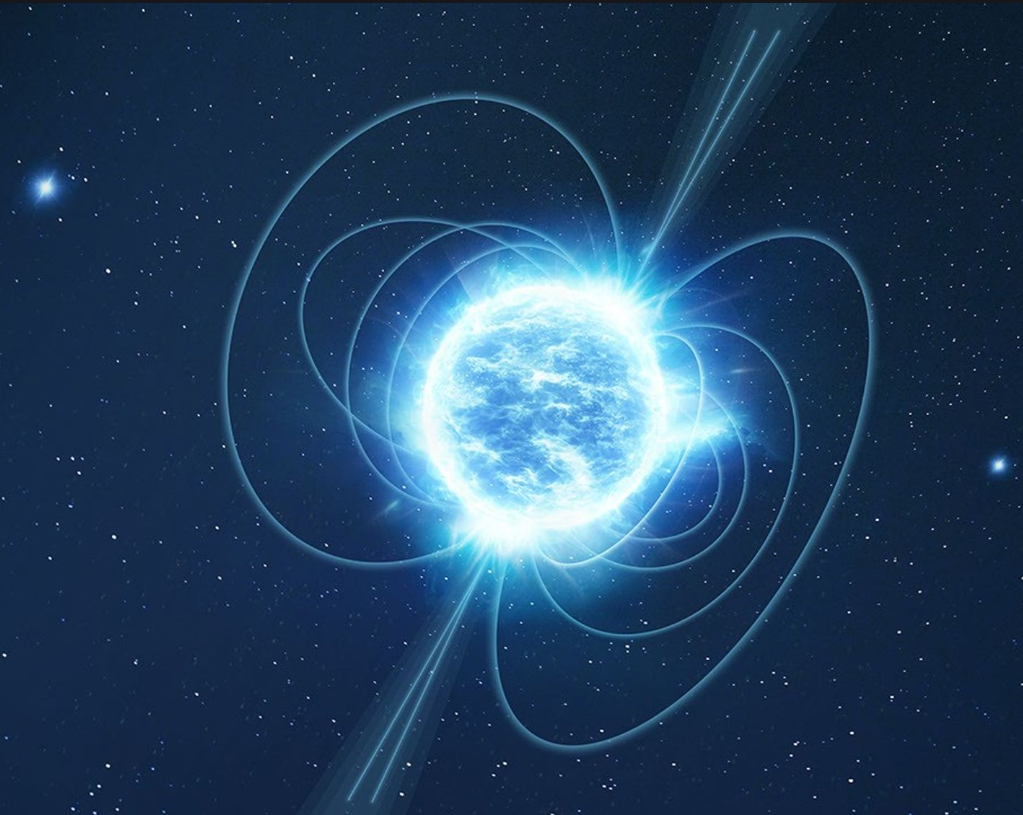
The flagship topic and the largest section on the site. Magnetars are among the most strongly magnetised objects in the universe, with fields far beyond anything found on Earth.
Learn about magnetars →Astronomy 101
What astronomy is, why we study space, and the vast scale of the universe.
Start here →Learning Journal
Short notes recorded during research, arranged chronologically from first discoveries to recent topics.
Read the journal →Quiz & Challenges
A self-marking quiz to check what you remember about stars, with instant feedback on each answer.
Take the quiz →A striking fact about neutron stars
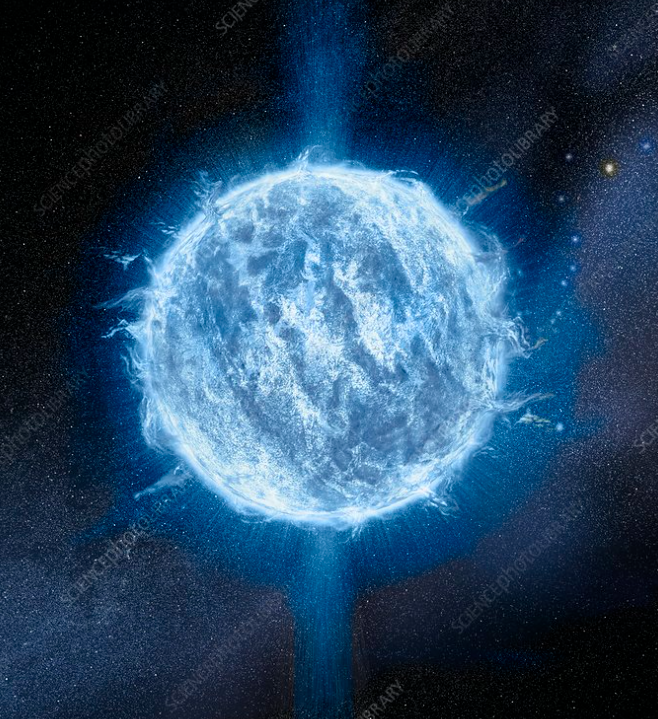
A teaspoon of neutron star material would weigh about a billion tonnes on Earth, around the same as a mountain. That's because when a big star dies, gravity crushes its core so hard that protons and electrons are squeezed into neutrons, packing the mass of more than our entire Sun into a ball only about 20 km across (which is smaller than Melbourne).
This is an ongoing project
New content is added as research continues and discoveries are published. Use the interactive explorer and quiz to test what you learn.