Home › Life of a Star
The Life Cycle of a Star
Stars aren't permanent. They are born, they shine for a very long time, and then they die, and how they die depends almost entirely on one thing: how much mass they started with. Lightweight stars like our Sun end up quiet and small. Heavyweight stars go out with the biggest explosions in the universe. Use the explorer below to step through every stage.
Watch: the life cycle of a star
This NASA eClips video explains how stars form, evolve, and die, and why we are made of star stuff.
Star Life Cycle Explorer
Click a stage (or use your ← → arrow keys). The diagrams are drawn with code.
Two paths, decided at birth
Once a star reaches the main sequence, its future is largely determined by its mass. Two distinct paths emerge:
Road A: small & medium stars
(up to about 8× the Sun's mass)
Nebula → Protostar → Main sequence → Red giant → Planetary nebula → White dwarf → (eventually) black dwarf.
Calm ending. This is our Sun's future.
Road B: massive stars
(more than about 8× the Sun's mass)
Nebula → Protostar → Main sequence → Supergiant → Supernova → Neutron star / magnetar or black hole.
Dramatic ending. This is where magnetars come from.
Stellar evolution tree
This branching diagram shows how the same starting point can lead to very different outcomes.
Comparison chart: how the endings differ
| End state | From stars of... | Size | What it's like |
|---|---|---|---|
| White dwarf | up to ~8 Suns | about Earth-sized | Hot ember, slowly cooling for billions of years |
| Neutron star | ~8 to 20 Suns | about 20 km across | Unbelievably dense; can spin hundreds of times a second |
| Magnetar | rare massive stars | about 20 km across | A neutron star with the strongest magnetic field known |
| Black hole | roughly >20 Suns | singularity | Gravity so strong not even light escapes |
The ultimate fate: black holes
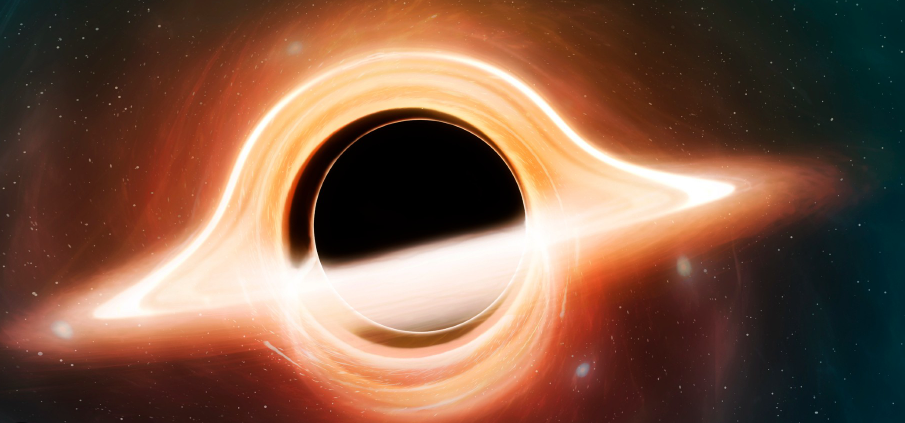
When a massive star's core is heavy enough after a supernova, not even neutrons can hold back the collapse. Gravity wins completely, forming a black hole, a region where space and time are so distorted that nothing, not even light, can escape.
The glowing ring in images like this is hot matter spiralling around the event horizon, heated to extreme temperatures before it crosses the point of no return. Black holes are the most dramatic possible ending on Road B in the chart above.